Meal Prep for Busy Weeks Without a Sunday Marathon
Make meal prep manageable by preparing a few useful components, planning storage carefully and leaving room for changes during the week.
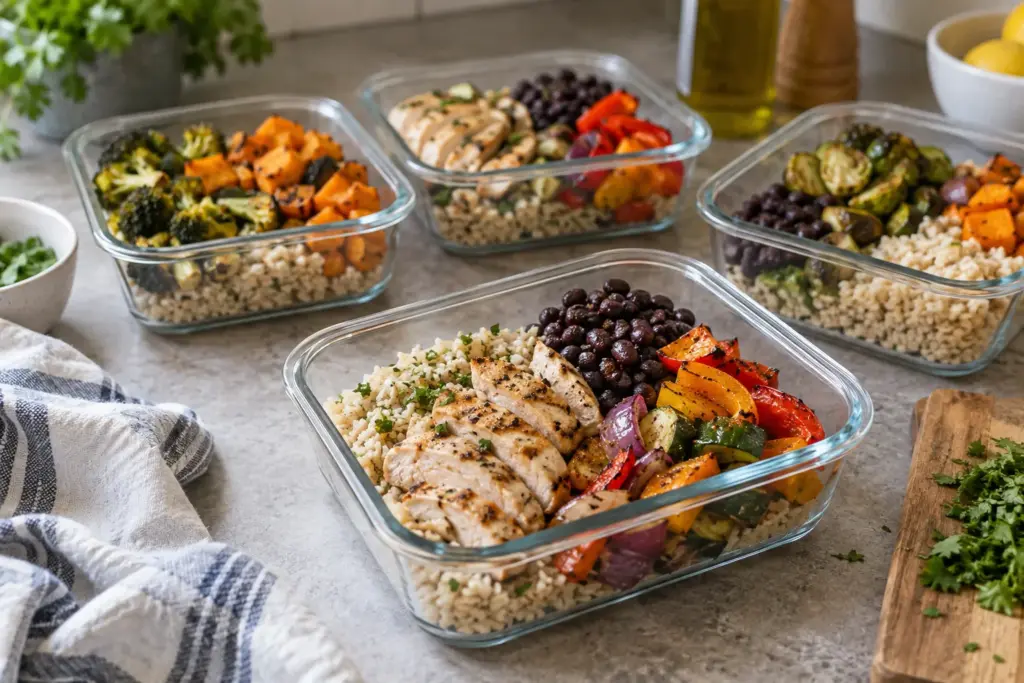
Meal prep for busy weeks can mean making one part of tomorrow's dinner easier. It does not have to mean identical containers for every meal or spending a whole day in the kitchen. Start with the moment in your week when cooking becomes most difficult.
If chopping vegetables slows you down, prepare an appropriate amount ahead. If choosing what to cook is the problem, a written menu may help more than batch cooking. Match the preparation to the actual obstacle.
Prepare components, not a rigid menu
Choose two or three foods that work in different combinations. A cooked bean dish, washed vegetables and a suitable sauce might support several meals, provided they are stored safely. You can change the starch or the seasoning when serving.
Make portions that suit your household and containers. Avoid cooking more than you can safely refrigerate or freeze. Label prepared food with its name and preparation date so you are not relying on memory later.
Put food safety into the plan
The UK Food Standards Agency advises cooling cooked food and refrigerating it within one to two hours, eating leftovers within 48 hours or freezing them, and reheating until steaming hot throughout. Reheat leftovers only once. Follow product-specific guidance too; cooked rice requires particular care.
If refrigeration has been interrupted, a label alone cannot establish that food is safe. Follow local food-safety advice for power interruptions. Do not taste questionable food to check it.
Try a shorter preparation session
- Decide which two meals will benefit most from preparation.
- Check that storage containers are clean and that cold storage has space.
- Prepare only the components you need, keeping raw and ready-to-eat foods separate.
- Label and store food promptly rather than leaving it on the counter while doing other chores.
- Write a short note about what still needs cooking or adding when you serve it.
This approach leaves room for a changed schedule. Freeze suitable extra portions promptly instead of assuming you will definitely want the same meal several days later.
What if I dislike eating leftovers?
Use preparation to reduce decisions rather than cooking everything ahead. Group ingredients for a meal, write a short shopping list or choose two quick dishes you can make fresh. Successful meal prep is whatever makes a real meal easier while keeping food safe; the number of matching containers is irrelevant.
Sources and further reading
Food Standards Agency: Cooking your food. The practical planning examples in this article are Wellbeing suggestions; adapt them to your circumstances.