Balanced Meals on a Budget: A Practical Shopping Plan
Build balanced meals on a budget with flexible ingredients, a useful shopping list and simple meal combinations that suit your household.
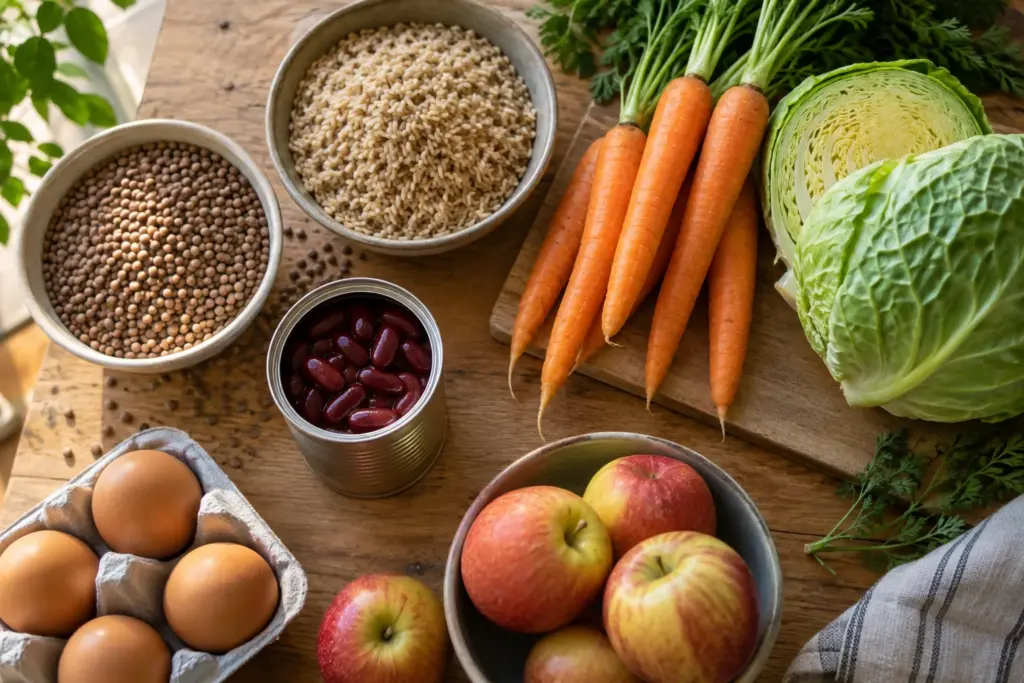
Balanced meals on a budget begin with the foods you can buy, store and enjoy. There is no requirement to fill a trolley with expensive powders or unfamiliar ingredients. A few versatile staples can give you several different meals without making every dinner the same.
NHS balanced-eating guidance encourages variety across food groups. Use that broad principle to guide your shopping rather than treating one fashionable ingredient as essential.
Check what you already have
Before making a list, look through the fridge, freezer and cupboard. Write down anything that needs using soon and the ingredients that could turn it into a meal. Half a cabbage, a tin of beans and a packet of pasta are a starting point, not an inadequate collection of leftovers.
Plan around your cooking equipment too. A meal that requires an oven, a blender and three pans is not economical if you cannot easily prepare it. Choose ingredients that fit your available storage, electricity and time.
Build a flexible shopping list
- A familiar starch: oats, potatoes, maize meal, rice or wholegrain bread where available and affordable.
- A protein option: beans, lentils, eggs, fish, chicken or another food you enjoy.
- Vegetables and fruit: compare seasonal fresh produce with suitable frozen or tinned options.
- A few flavour builders: herbs, spices, lemon or an onion can help the same basics feel different.
These are options, not a compulsory basket. Account for allergies, cultural preferences and any prescribed eating plan. Compare unit prices, but avoid larger packs if part of the food is likely to be wasted.
Turn the list into actual meals
Sketch three combinations before shopping. For example, a bean-and-vegetable stew could accompany maize meal; eggs and tomatoes could go with toast; and a lentil sauce could be served with pasta. Change the vegetables according to what is affordable.
Keep a simple backup meal for a night when the original plan falls apart. A cupboard-based option is useful only if the household will actually eat it, so test one before buying ingredients in bulk.
Is healthy eating always cheaper when you cook from scratch?
Not necessarily. Cost includes fuel, equipment, time and food waste as well as the shelf price. A convenient ingredient can be worthwhile when it makes a meal possible. Review what you used at the end of the week, then adjust the next list around those practical observations.
Sources and further reading
NHS: Eating a balanced diet. The practical planning examples in this article are Wellbeing suggestions; adapt them to your circumstances.