How to Add More Fibre to Everyday Meals
Find practical ways to add fibre through familiar meals, with gradual changes and flexible ideas for breakfast, lunch and dinner.
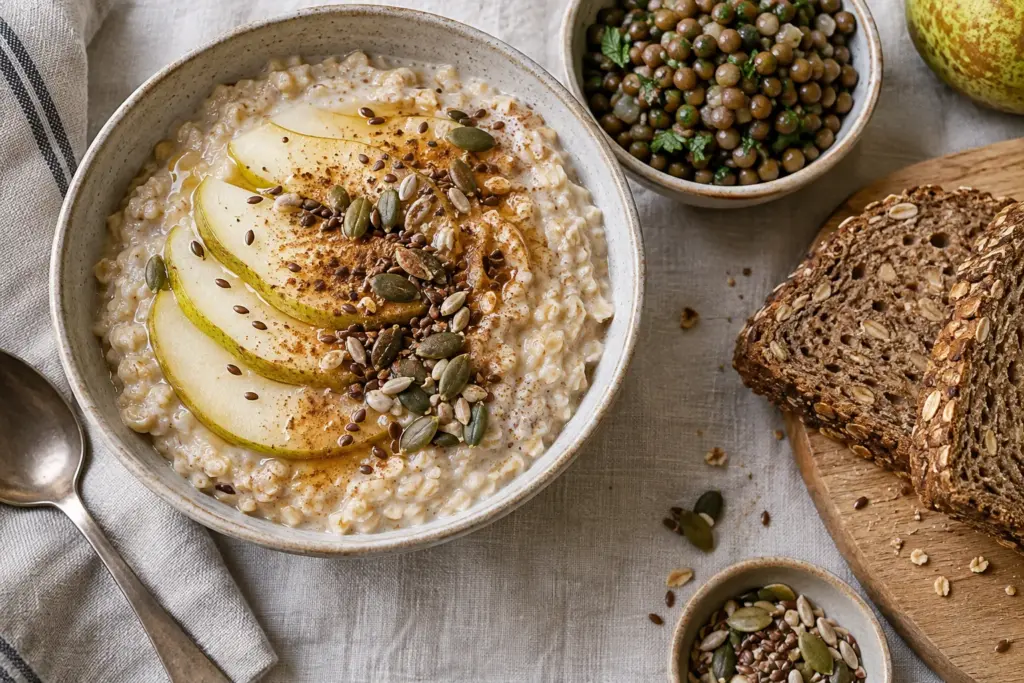
Adding more fibre to everyday meals is often a matter of changing one ingredient rather than replacing your entire diet. Start with a meal you already eat regularly and consider which familiar food could add variety.
The NHS identifies wholegrains, pulses, fruit and vegetables as useful fibre sources. Its general adult guidance is around 30 grams a day, but individual needs and prescribed diets can differ. You do not need to reach a target overnight.
Choose one change at breakfast
If you enjoy porridge, keep it and consider adding a suitable fruit or a small amount of seeds. If you usually eat bread, compare the fibre information on affordable options. A change you enjoy is more useful than buying a large bag of something you will never want again.
Breakfast does not have to look a particular way. Leftover vegetables in an omelette, beans with toast or a familiar wholegrain cereal can all be starting points. Adapt ingredients for allergies and preferences.
Add to lunch and dinner
Try adding beans or lentils to a dish you already make, such as a soup, curry or tomato sauce. Introduce a modest amount first so you can see how it changes the texture and how you feel afterwards. Vegetables can be served on the side or included in the main dish.
Wholegrain versions of pasta or rice are another option, but they are not the only route. A household may prefer to make one grain change while keeping other familiar staples. Price, availability and enjoyment all matter.
Build variety gradually
- Pick one meal to adjust this week.
- Buy a small amount of the new ingredient first.
- Increase fibre gradually and drink enough fluid for your needs.
- Notice persistent discomfort rather than assuming every symptom is part of adjusting.
If you have a digestive condition, have been advised to follow a low-fibre diet or develop persistent symptoms, seek individual advice before making large changes. General food ideas should not override treatment instructions.
Do I need fibre supplements?
Not automatically. Food offers a range of nutrients and different textures and flavours. Supplements may have a place for particular needs, but a clinician or dietitian can advise on suitability. Begin by reviewing what is already on your plate and where one realistic addition could fit, instead of buying several products at once.
Sources and further reading
NHS: Getting more fibre. The practical planning examples in this article are Wellbeing suggestions; adapt them to your circumstances.