Beginner Strength Training at Home: A Simple Start
Learn how to approach strength training at home with a stable setup, a few accessible movements and a gradual, comfortable starting point.
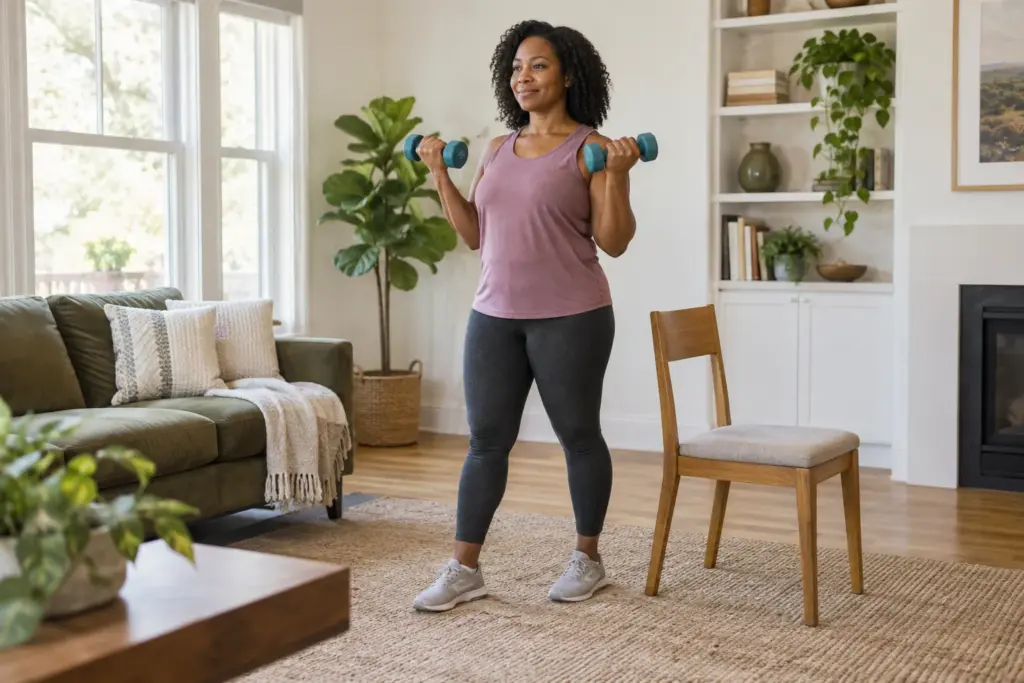
Beginner strength training at home starts with learning a movement, not buying equipment. A small clear space and a sturdy chair may be enough to explore an introductory routine. The aim of a first session is to discover what you can do comfortably and repeat with control.
The NHS includes chair rises and wall press-ups in its home strength guidance and advises building up gradually. Its illustrated instructions are a useful companion to this planning guide.
Set up before you begin
Choose a chair that will not slide or tip, avoid wheels and clear loose rugs and clutter. Wear clothing that lets you move freely. Keep support within reach if balance is a concern, and do not use lightweight furniture as exercise equipment.
If you are unsure whether a movement is suitable after surgery, during pregnancy, with an injury or with a long-term condition, get individual advice first. An exercise professional can help with technique; a clinician can advise on relevant medical restrictions.
Learn a small selection of movements
- Chair rise: practise standing from a stable chair and sitting back down with control, using appropriate support if needed.
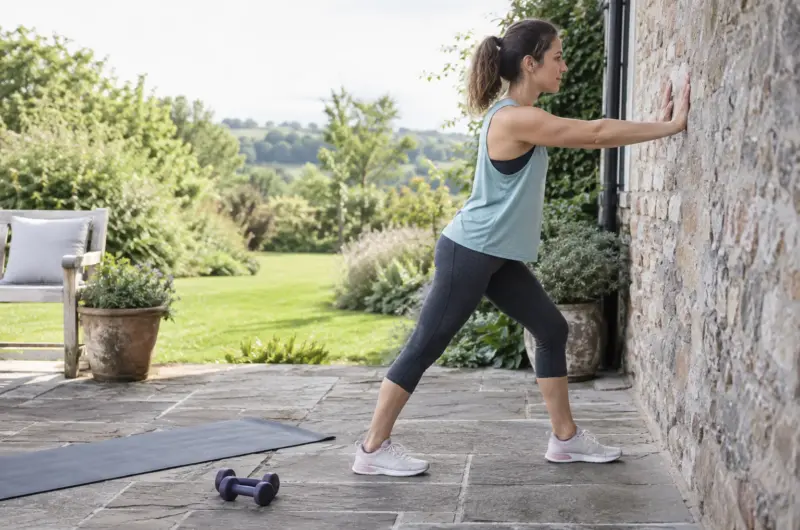
- Wall press-up: place your hands against a secure wall and explore a small, comfortable bending and straightening movement at the elbows.
- Supported heel raise: holding a stable support, gently lift and lower the heels if this is comfortable for you.
Follow the source illustrations for positioning. Begin with only a few controlled repetitions rather than pushing to a number. Avoid holding your breath or rushing to finish. Stop a movement that causes pain.
Leave space between sessions
Put a short session on two suitable days with a rest day between them as an organising example. Adjust that pattern to your recovery and professional advice. A quiet, consistent ten-minute slot may fit your week better than a long session you keep postponing.
Write down the movement and how it felt. Once it feels familiar, change one thing at a time, such as adding a small number of repetitions. You do not need to increase difficulty at every session.
Is heavier always better?
No. Control, an appropriate movement and a routine that suits you come first. Loading a movement before you understand it adds complexity. If progress stalls or a movement feels awkward, ask for guidance rather than improvising with heavy household objects. A useful first milestone is being able to repeat your chosen exercises confidently.
Sources and further reading
NHS: Strength exercises. The practical planning examples in this article are Wellbeing suggestions; adapt them to your circumstances.